Democrats set to control Arizona Capitol in 2027; data centers could be first test
Hobbs opposes a statewide data center moratorium that some legislative Democrats want, setting up a possible early fight inside the new trifecta.
What to know
- AZPM and the Arizona Capitol Times report Democrats won the governor's office and both chambers, the first such result in 60 years.
- Votebeat, citing the AP, reports Democrats hold 20 of 30 Senate seats and at least 37 of 60 House seats; official results were unavailable.
- Oscar De Los Santos and Priya Sundareshan are the incoming House speaker and Senate president; the session starts Jan. 11.
- Hobbs has disavowed a data center moratorium that some Democrats, including Sen. Lauren Kuby, are weighing.
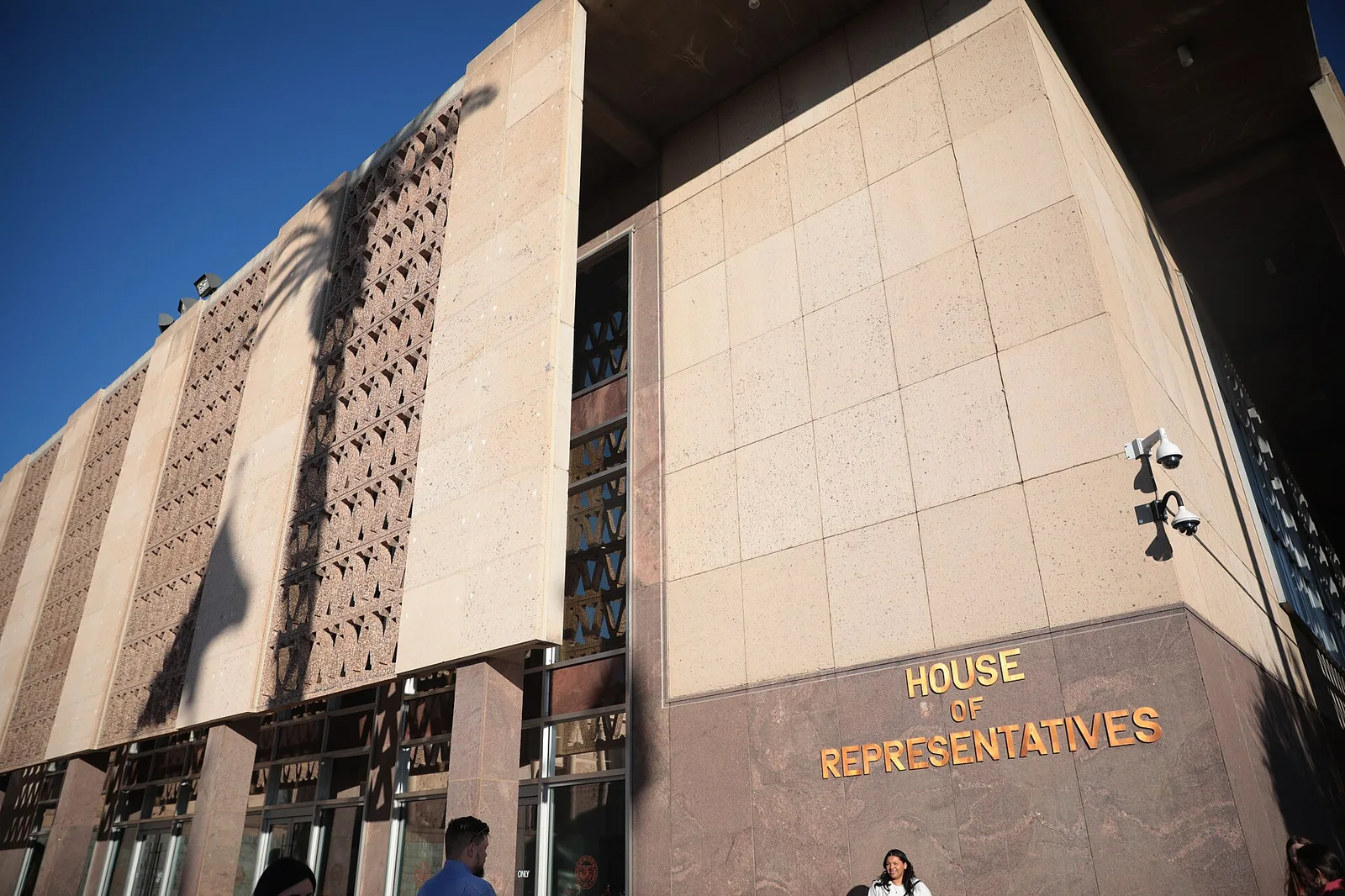
PHOENIX — Democrats are set to control the Arizona governor's office and both legislative chambers in 2027, according to AZPM and the Arizona Capitol Times, which calls the result a "new Democratic trifecta." AZPM said Democrats won majorities in both chambers "for the first time in 60 years."
Votebeat, citing the Associated Press, reported Nov. 10 that Democrats hold 20 of the Senate's 30 seats and at least 37 of the House's 60 seats. It gave no as-of time for those totals.
Gov. Katie Hobbs, who defeated Republican Andy Biggs on Nov. 3, spoke to about 150 supporters and volunteers at a victory rally in Tucson on Friday, Nov. 6, AZPM reported. "Every race I have ever run, people have counted me out. And every time, Arizona has had the final word," she said.
The first big question is already visible: what to do about data centers. The Arizona Capitol Times reported that regulating the facilities "could be an early source of friction for the new trifecta," because some Democrats back a statewide moratorium while Hobbs does not.
Who holds the chambers
Republicans lost seats in the Senate, shrinking their caucus from 17 to 10 in the 30-member chamber, according to a Capitol Media Services story published by KJZZ. The story also reported that House Republicans lost their majority, which reduced Speaker Steve Montenegro to minority leader.
The story noted that backers of nonpartisan bills may need a few Republicans to reach the 16 votes required for approval in the Senate. The Arizona Chronicle could not confirm a final House seat count; Votebeat's figure is "at least 37" of 60.
The 58th Legislature convenes in January 2027, the Arizona Daily Independent reported. Votebeat put the first day of the session at Jan. 11.
The 2027 leadership
Caucuses chose their leaders this week, the Arizona Daily Independent reported.
- House Democrats: Oscar De Los Santos, incoming speaker; Nancy Gutierrez of Tucson, majority leader; Brian Garcia of Tempe and Kevin Volk of Tucson, majority whips; Quantá Crews of Phoenix, speaker pro tempore.
- House Republicans: Montenegro, minority leader; Michael Carbone, assistant minority leader; Lupe Diaz, minority whip.
- Senate: Priya Sundareshan is the incoming Senate president. Republicans chose John Kavanagh as minority leader, Tim Dunn as assistant minority leader and Leo Biasiucci as minority whip.
The Independent's account lists no Senate Democratic leadership team beyond Sundareshan.
A Republican minority takes stock
Kavanagh, the Senate minority leader and a Fountain Hills Republican, told Capitol Media Services the losses were out of the party's hands. "This debacle was pretty much out of our control," he said. He blamed dissatisfaction at the federal level, saying it "wiped out almost everybody with an R after their name."
He said voters were not rejecting Republican policies. "This was just anti-R because of gas prices and the war in Iran and everything else," he said. He said he hopes those conditions will ease within two years.
On the minority's role, Kavanagh was direct. "We can't stop legislation," he said. He described a Republican role of criticizing Democratic bills and weighing in on close, nonpartisan measures that need a few GOP votes, and said the caucus will stick to positions on affordability, low taxes, less regulation and border enforcement.
Kavanagh said, according to the Arizona Daily Independent, that rebuilding a Republican majority "starts with earning it," and pledged to work with Democrats where they agree. The Independent said Senate Republicans listed defending low-tax policies, supporting law enforcement and addressing long-term water needs among their priorities.
The Democratic agenda
Democrats have other priorities besides data centers. Votebeat reported that they want to restore the Permanent Early Voting List, repeal the proof-of-residency requirement for new voters and consider same-day or automatic voter registration. Rep. Brian Garcia said, "People like the accessibility of the early voting list." Kuby said, "I think we'll do very popular, pro-voter bills."
Hobbs, in her Tucson speech, named border security, $1 billion for public schools without raising taxes, expanded apprenticeships and affordability as second-term priorities, AZPM reported. She said she would work as hard for voters who opposed her as for those who backed her.
The first test: data centers
Hobbs has already publicly disavowed a moratorium, the Capitol Times reported. Her position is that a moratorium is not the right approach, though she is open to other regulations. The paper noted it is unclear whether that has changed, since she has largely avoided reporter questions since winning. In September she said, "We have to continue to focus on ways that we can grow the economy and do that sustainably."
Democrats in the Legislature are less settled. Sen. Lauren Kuby, D-Tempe, called a potential moratorium a "No. 1 policy initiative" that legislative Democrats are examining. "Whether it's the tax incentives or whether it's looking at community benefit agreements or moratoriums," she said. Attorney General Kris Mayes has reaffirmed her support for a pause on development.
Sundareshan, speaking at the Democrats' celebration rally at the Capitol on Tuesday, addressed Hobbs' opposition. "Some of those conversations were before we entered this new day in Arizona," she said. "I think what we need to see is what we can do to be responsive to the voters," she said, adding that she recognizes "some benefits that the industry might bring."
Sundareshan also said she wants the Legislature to take a larger role in overseeing the Corporation Commission's handling of data center growth. An August Noble Predictive Insights poll found that "voters across party lines favor limiting new data center development," the Capitol Times reported.
What happens next
The Legislature convenes Jan. 11, according to Votebeat. Whether lawmakers send Hobbs a moratorium she has said she opposes, or settle on tax incentives, community benefit agreements or other rules, will be among the first tests of the new alignment.
Sources
Links to the reporting and records this story is based on.
- AZPM'Arizona has had the final word': Gov. Hobbs celebrates reelection in TucsonNov. 9, 2026
- Arizona Capitol TimesData center regulation could be first test of Arizona's new Democratic trifectaNov. 10, 2026
- Arizona Daily IndependentArizona Democrats and Republicans Elect Legislative Leadership for 2027 SessionNov. 9, 2026
- KJZZState lawmaker says Arizona Republican election losses 'pretty much out of our control'Nov. 10, 2026
- Votebeat2026 results: Democrats flipped the Arizona Legislature. What's their election agenda?Nov. 10, 2026